For more than five centuries, the final resting place of England's last king to die in battle was unknown. In August 2012, a team of archaeologists working in a Leicester car park uncovered the answer.
The Lost Grave Beneath Greyfriars
The remains of King Richard III were discovered beneath a car park on the site of the former Greyfriars Priory in Leicester. The location had long been suspected by historians, but no thorough search had taken place until 2012. The priory, which stood during the medieval period, was demolished in the sixteenth century; its exact footprint was later buried beneath modern buildings and tarmac.
Battle of Bosworth and a Hasty Burial
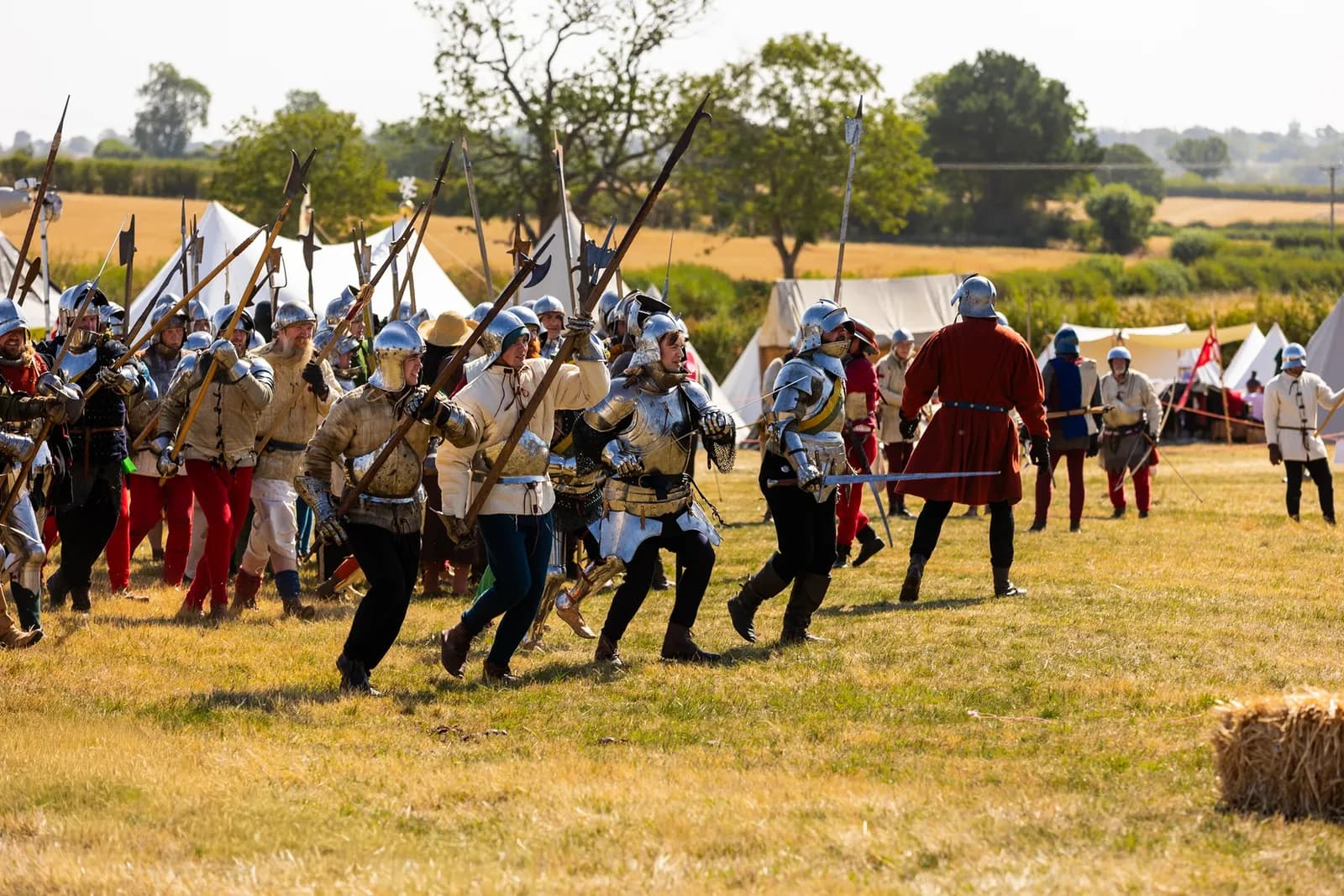
Richard III died at the Battle of Bosworth Field on 22 August 1485. He was the last English monarch to be killed in battle. Contemporary accounts record that his body was brought to Leicester and buried at the Greyfriars church, though the precise spot was lost as the priory was dismantled and the city built over it.
The Search That Began With a Society
The excavation was a partnership between the University of Leicester Archaeological Services, Leicester City Council, and the Richard III Society. Philippa Langley, a member of the Richard III Society, initiated and championed the search. Her advocacy helped secure the funding and institutional backing required to break ground.
First Bones on Day One
Work began in August 2012. Remarkably, human remains were uncovered on the very first day of the dig. The skeleton was found in what had been the choir of the priory church, a position that suggested a high-status burial.
The Skeleton Speaks
The University of Leicester identified the skeleton as Richard III through multiple lines of evidence. Radiocarbon analysis dated the bones to the correct period. The skeleton showed severe scoliosis, a curved spine that matched contemporary descriptions of the king. Crucially, the skull displayed eleven wounds, eight of them to the head, indicating the king had probably lost his helmet during combat. Two injuries to the lower part of the skull were identified as the most likely fatal blows, possibly inflicted by a sword or staff weapon.
DNA From a Canadian Cabinet-Maker
Mitochondrial DNA provided the final confirmation. The university compared DNA from the skeleton with that of two matrilineal descendants of Richard III's eldest sister, Anne of York. One of them was Michael Ibsen, a Canadian-born furniture maker. The match closed the case.
Reburial in Leicester Cathedral
Following the identification, Richard III was reburied in Leicester Cathedral in 2015. The service drew international attention and formally returned the king to the city where he had been interred in 1485.
A City Remembers
Leicester has since established the King Richard III Visitor Centre to tell the story of the king's life, death, and rediscovery. The centre sits near the excavation site and has become a fixture of the city's heritage offer.