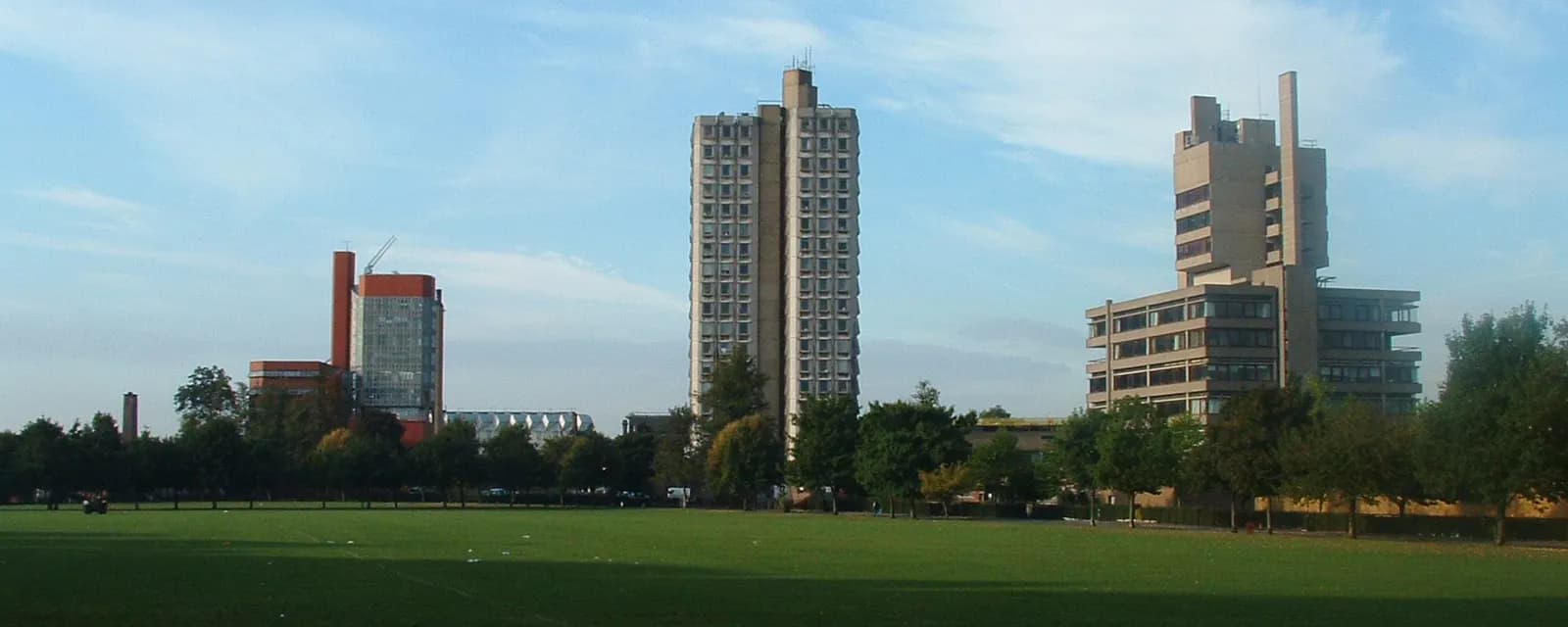
On 10 September 1984, a routine experiment in a University of Leicester laboratory produced a discovery that would reshape criminal justice, paternity law and immigration procedure across the globe. Sir Alec Jeffreys, then a professor of genetics at Leicester, had just created the first DNA fingerprint.
A Leicester Lab Discovery
Alec Jeffreys was born in Oxford on 9 January 1950 and moved to Luton six years later. He graduated with first-class honours in biochemistry from the University of Oxford in 1971 and completed a doctorate on the mitochondria of cultured mammalian cells before joining the University of Leicester in 1977. His research centred on the highly variable regions of human DNA known as minisatellites.
On the morning of Monday, 10 September 1984, Jeffreys was examining an X-ray film image of a DNA experiment that compared samples from different members of his technician's family. He noticed unexpected patterns of similarity and difference. Within roughly half an hour, he recognised that these variations could serve as a unique biological identifier; DNA fingerprinting was born in a Leicester laboratory.
From Family DNA to a Global Breakthrough
DNA fingerprinting works by detecting variations in the highly variable minisatellite regions of the human genome. Each person's pattern is unique, with the exception of identical twins. The discovery's first practical application came in 1985, when it was used to resolve a disputed immigration case for a British boy whose family was from Ghana, establishing his biological relationship to relatives and allowing him to remain in the United Kingdom.
A refinement known as DNA profiling, which focuses on a smaller number of minisatellites, soon made the technique more sensitive, reproducible and compatible with computer databases. Modern systems use variable microsatellites, or short tandem repeats (STRs), and the UK National DNA Database was launched in 1995 using this STR-based profiling. Current technology can process hundreds of samples each day with a discrimination power of one in more than a billion when 16 microsatellites plus a sex-determination marker are examined.
The Narborough Murders and the First Forensic Test
The technique's power was demonstrated most dramatically in Leicestershire itself. In 1983, 15-year-old Lynda Mann was murdered in Narborough. Three years later, Dawn Ashworth, also 15, was killed in the same village. Richard Buckland, a local teenager with learning difficulties, confessed to the second murder but denied the first, yet police suspected him of both.
In 1986, Jeffreys was asked to compare DNA from semen samples found at both crime scenes with Buckland's blood. The DNA fingerprints matched each other, but they did not match Buckland; he was innocent. Leicestershire Constabulary then conducted Britain's first mass DNA screening, collecting samples from local men. Colin Pitchfork was identified and convicted after his DNA matched semen samples from both victims. In 1988, he became the first person convicted of murder on the basis of DNA evidence, while Buckland became the first person to be exonerated by the same technology.
Worldwide Reach and Recognition
The technique quickly found applications beyond the courtroom. In 1992, Jeffreys' methods were used to confirm the identity of Josef Mengele's exhumed skeleton by comparing DNA from the remains with samples from the Nazi doctor's mother and son.
Jeffreys' contributions have been recognised with numerous honours. He was elected a Fellow of the Royal Society in 1986, knighted by Queen Elizabeth II in 1994 for services to genetics, and awarded the Albert Einstein World Award of Science in 1996. He received the Louis-Jeantet Prize for Medicine in 2004, the Albert Lasker Award for Clinical Medical Research in 2005, the Copley Medal in 2014, and was appointed a Member of the Order of the Companions of Honour in 2017.
A Continuing Leicester Legacy
Jeffreys' connection to Leicester endures. On 26 November 1992, he was made an honorary freeman of the City of Leicester. He remains a professor of genetics at the University of Leicester, the institution where a single X-ray film transformed modern science. Four decades after that September morning, the city continues to stand at the centre of a technique that has resolved paternity disputes, exonerated the innocent and brought perpetrators to justice across the world.